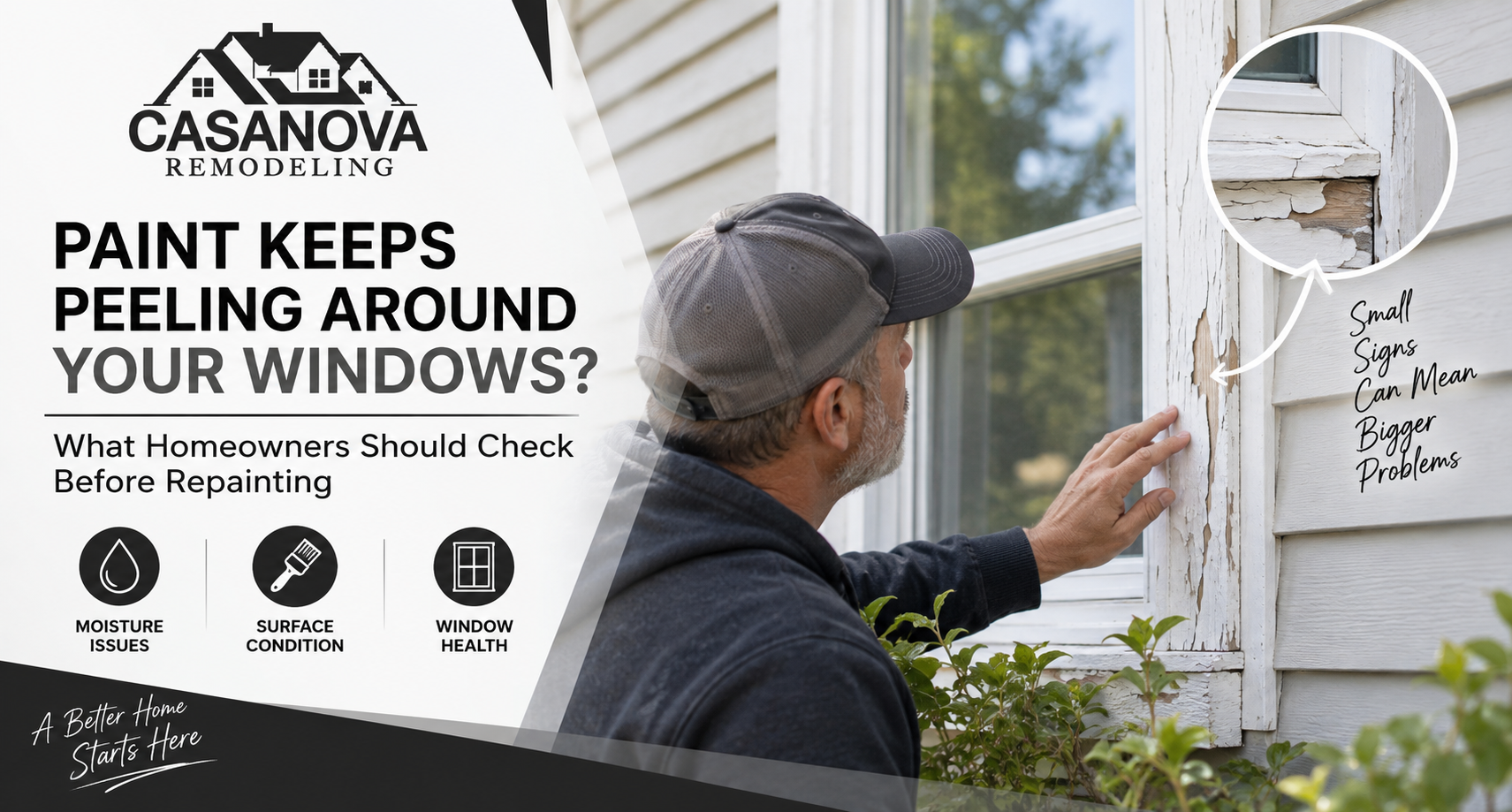
Paint Keeps Peeling Around Your Windows? What Homeowners Should Check Before Repainting
Posted by: sarah Tags: no tags | Categories: Uncategorized
30
You notice a few flakes of paint around a window, so the solution seems obvious: scrape the loose paint, apply a fresh coat, and the problem is gone. A few months later, however, the same area begins peeling again.
When paint repeatedly fails around windows, repainting may only cover the visible symptom. Moisture, aging caulk, damaged trim, poor surface preparation, or problems with the window itself can all contribute. Before reaching for another can of paint, homeowners should understand why the paint is peeling and address the underlying issue first.
Why Does Paint Peel Around Windows?
Exterior windows are constantly exposed to changing weather conditions. Rain, sunlight, humidity, temperature changes, and normal wear can gradually affect paint and surrounding materials.
Paint may also fail if it was applied over a dirty, damp, glossy, or poorly prepared surface. In other cases, moisture may be getting behind the paint and causing it to lose adhesion.
Home improvement companies such as Casanova Remodeling work across different exterior services, which is important because peeling paint is not always an isolated painting problem.
Look at Where the Peeling Starts
The location of the damage can provide useful clues.
Is the paint peeling mainly along the bottom of the window trim? Is it concentrated around one corner? Does it appear where two materials meet? Or is the entire painted surface deteriorating?
If one small section repeatedly fails while the surrounding paint remains in good condition, it may be worth investigating that specific area before repainting.
Also compare several windows. If the same side of the house has more peeling than others, exposure to sun, rain, shade, or moisture may be contributing.
Check the Caulk Around the Window
Caulk helps seal certain joints and gaps around windows, but it does not last forever.
Over time, it can crack, shrink, separate, or become brittle. When gaps develop, moisture may reach areas that should remain protected.
Look for obvious cracks or missing sections around the window and trim. However, simply adding new caulk over deteriorated materials is not always the right solution. The condition of the surrounding surface should be understood first.
If you see significant deterioration, recurring moisture, or soft material around the window, consider having the area professionally evaluated.
Surface Preparation Matters Before Painting
A fresh coat of paint needs a suitable surface underneath it.
Painting directly over dirt, chalky residue, mildew-like staining, or loose old paint can reduce how well the new coating adheres. Exterior preparation may involve cleaning and removing unstable material before appropriate primer and paint are applied.
Homeowners researching Power washing services in Morris CT may be preparing exterior surfaces for maintenance or improvement. However, pressure washing should be appropriate for the particular material and condition. Excessive pressure or incorrect technique can damage some surfaces or force water where it does not belong.
Cleaning is part of preparation, not a substitute for repairing damaged materials.
Is the Trim Still in Good Condition?
Paint can make a surface look better, but it cannot restore material that has already deteriorated.
Pressing aggressively on exterior trim is not recommended, but visually inspect it for cracking, swelling, separation, discoloration, or areas that appear damaged. If the underlying material is compromised, repeatedly repainting it may produce only temporary cosmetic improvement.
This is one reason homeowners considering Affordable painting contractors in Seymour CT should think beyond paint color. Proper preparation and identification of damaged areas can be just as important as the final coat.
Could the Window Itself Be Part of the Problem?
Sometimes peeling around a window raises a larger question: is the issue limited to the trim and paint, or is the window assembly itself showing signs of deterioration?
Look for recurring moisture around the opening, visible deterioration, difficulty operating the window, damaged components, or other changes that appeared around the same time as the peeling.
These signs do not automatically mean the window needs replacement. The cause should be properly evaluated first.
For homeowners exploring Affordable window replacement in Holliston MA, understanding the condition of the existing window and surrounding materials can help determine whether maintenance, repair, or replacement is the more appropriate direction.
Don't Paint Over a Damp Surface
One of the simplest but most important rules is to avoid trapping moisture underneath new paint.
After cleaning or wet weather, exterior materials need appropriate drying time before coatings are applied. Painting a surface that still contains excess moisture can interfere with adhesion and may lead to premature failure.
Weather conditions also matter. Temperature, humidity, direct sunlight, and the specific paint manufacturer's application instructions should all be considered when planning exterior painting.
When Repainting Alone May Be Enough
Not every patch of peeling paint indicates a serious home problem.
Sometimes the coating is simply old, previous preparation was inadequate, or years of weather exposure have taken their toll. If the underlying surface is sound and there are no signs of recurring moisture or material damage, proper preparation followed by an appropriate repainting process may be all that is needed.
The key is determining that before covering the area again.
Final Thoughts
If paint keeps peeling around your windows, treat it as a clue rather than simply a cosmetic annoyance. Look at where the peeling begins, inspect visible caulk and trim, consider moisture exposure, and think about how the surface was prepared previously.
Repainting can improve the appearance of your home, but the best results usually start underneath the paint. Finding and addressing the reason for repeated peeling first can help homeowners avoid doing the same job again a few months later.