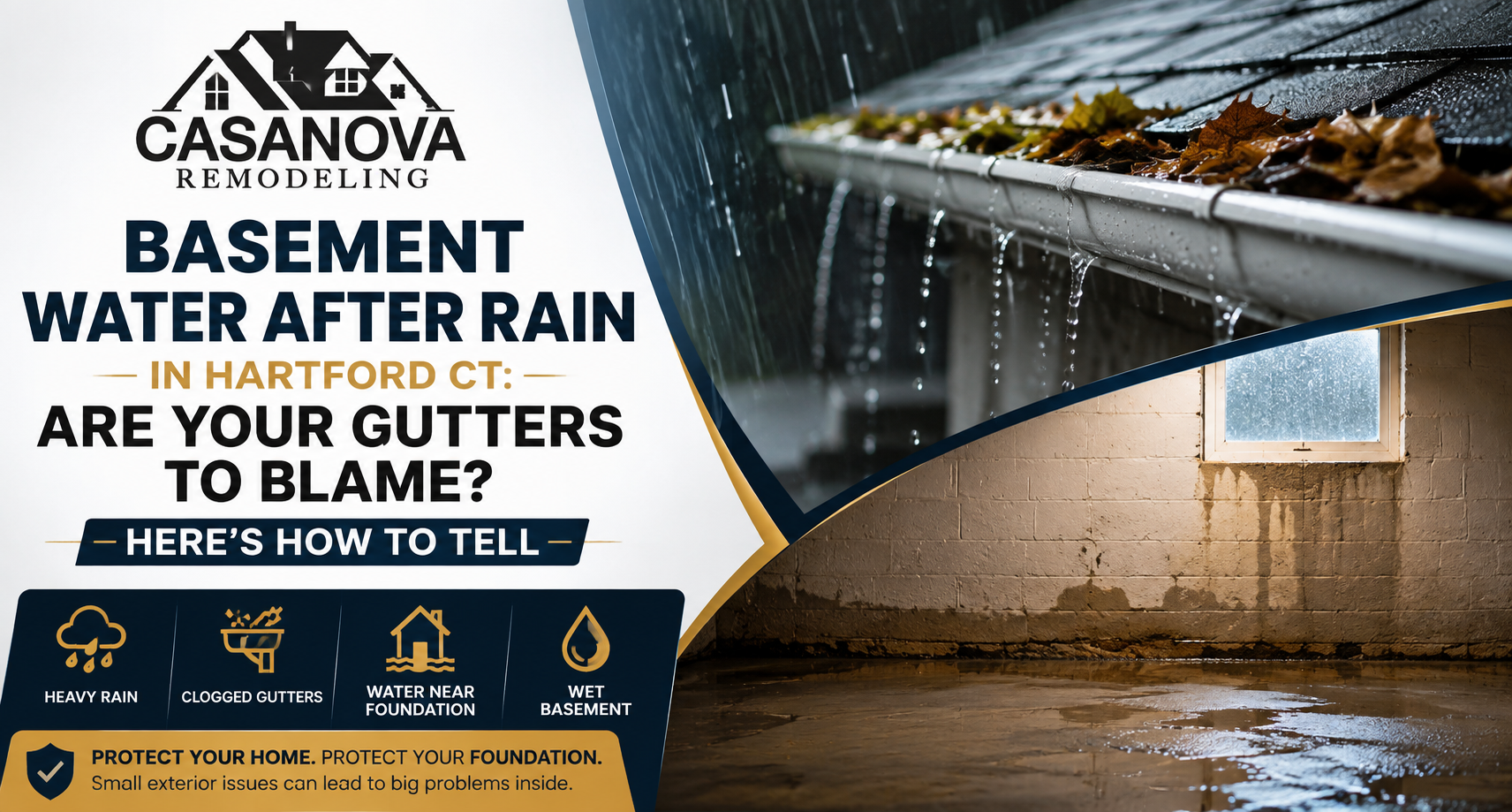
Basement Water After Rain in Hartford CT: Are Your Gutters to Blame?
Posted by: sarah Tags: no tags | Categories: Uncategorized
15
A heavy rainstorm passes, and everything seems normal until you walk downstairs and notice a damp basement wall, a small puddle on the floor, or a musty smell. Many homeowners immediately assume there is a serious basement or foundation problem. While that is sometimes possible, the source of the water may actually be much higher up - your gutters.
Gutters are designed to control rainwater and move it safely away from your home. When they become clogged, damaged, or poorly positioned, water can collect around the foundation and eventually find its way into the basement. Understanding how this happens can help homeowners catch problems early and prevent unnecessary damage.
How Do Gutters Protect Your Basement?
Your roof collects a surprising amount of water during heavy rain. Gutters catch that water and direct it into downspouts, which should carry it away from the foundation.
When this system works correctly, rainwater is controlled before it can soak the ground immediately surrounding your home. But when gutters overflow or downspouts release water too close to the house, the soil near the foundation can become saturated.
Once the ground holds more water than it can easily absorb, moisture may begin entering through foundation cracks, joints, basement windows, or other vulnerable areas.
Clogged Gutters Are a Common Problem
Leaves, twigs, dirt, roofing granules, and other debris can gradually collect inside gutters. During light rain, you may not notice anything unusual. Heavy rain, however, can quickly reveal a blockage.
Instead of flowing toward the downspout, water spills over the edge of the gutter. If this happens repeatedly, large amounts of water can land near the same section of your foundation.
Regular exterior cleaning makes it easier to notice clogged gutters, staining, buildup, and other maintenance issues. Homeowners considering Power washing services in Morris CT can also use exterior maintenance as an opportunity to inspect areas where water or debris tends to collect.
Check Where Your Downspouts End
A perfectly clean gutter system can still contribute to basement moisture if the downspouts are not directing water far enough away.
After a storm, walk around your property and look at where the water is going. If a downspout ends directly beside the foundation and creates a large puddle, that water may eventually soak into the surrounding soil.
Downspout extensions or other drainage improvements can help direct water farther from the house. The goal is simple: keep as much roof runoff as possible away from basement walls and the foundation.
Damaged or Sagging Gutters Can Also Cause Trouble
Gutters do not have to be completely clogged to stop working properly. Loose connections, cracks, leaks, sagging sections, and incorrect slopes can all interfere with drainage.
A small leak may repeatedly send water down an exterior wall. Over time, that moisture can affect siding, trim, paint, and other materials.
Peeling or bubbling exterior paint can sometimes be a sign that moisture is affecting the surface. If repairs and repainting are needed, Affordable painting contractors in Seymour CT may help homeowners restore affected exterior areas after the underlying moisture issue has been identified and corrected.
Gutters May Not Be the Only Cause
It is important to remember that a wet basement does not automatically mean your gutters are responsible.
Poor yard grading, foundation cracks, damaged window wells, plumbing problems, groundwater, and inadequate drainage can also allow moisture into a basement. If your gutters and downspouts are functioning correctly but water continues to appear, the property may need a more detailed inspection.
Finding the actual source is more effective than repeatedly drying the basement without fixing the problem.
Pay Attention to Windows and Other Entry Points
Basement moisture can also appear around windows, particularly when frames, seals, or surrounding materials have deteriorated. Water may collect around a poorly protected window opening and eventually enter the home.
Older windows elsewhere in the property can also develop damaged seals, drafts, or moisture-related issues. For homeowners dealing with aging or inefficient windows, Affordable window replacement in Holliston MA can be part of a broader plan to improve the home's exterior protection and energy efficiency.
Why You Shouldn't Ignore a Wet Basement
A small puddle may not seem serious, especially if it disappears after the weather improves. However, repeated moisture can eventually damage flooring, drywall, furniture, stored belongings, and finished basement areas.
Persistent damp conditions can also encourage mold and mildew. More importantly, recurring water intrusion usually means there is a problem somewhere that deserves attention.
After heavy rain, check your basement and then inspect the outside of your home. Look for overflowing gutters, standing water, damaged downspouts, foundation cracks, and areas where water is collecting close to the house.
Final Thoughts
When your basement gets wet after heavy rain, the solution may begin outside rather than downstairs. Gutters and downspouts are an important part of your home's water-management system, and even a relatively small drainage problem can send a significant amount of water toward the foundation.
Keeping gutters clean, checking downspouts, watching for exterior damage, and responding quickly to warning signs can help protect your home from larger problems.
For homeowners looking to maintain and improve different areas of their property, Casanova Remodeling provides a range of remodeling and exterior home improvement services designed to help keep homes functional, attractive, and well maintained.