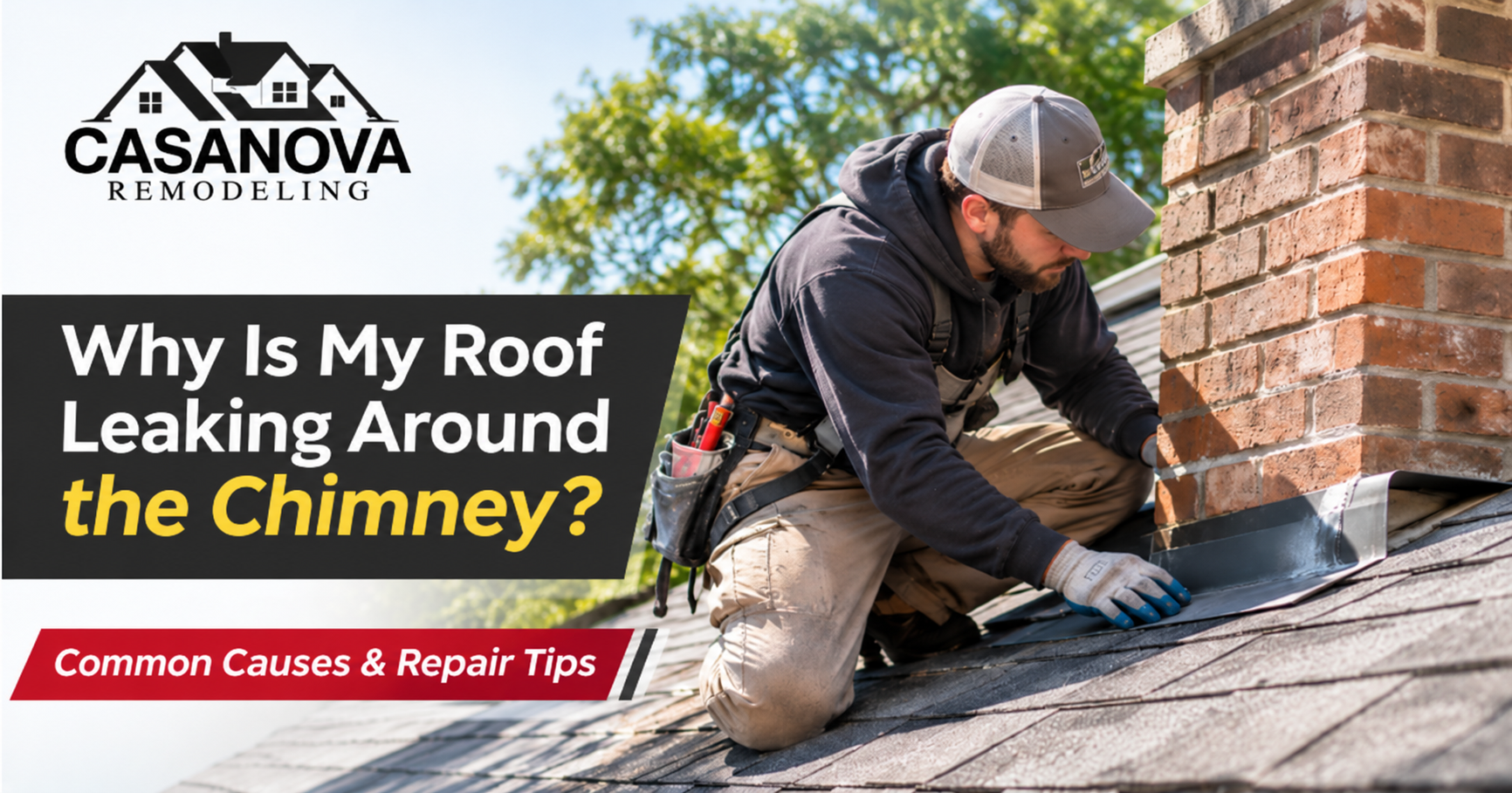
Why Is My Roof Leaking Around the Chimney in Bristol, CT?
Posted by: sarah Tags: Bristol CT Roofing, Casanova Remodeling Is this conversation helpful so far?, Chimney Flashing Repair, Chimney Leak Repair, Chimney Roof Leak, Residential Roof Repair, Roof Leak Repair, Roof Leaking Around Chimney, Roof Water Damage, Roofing Contractor Bristol CT | Categories: Uncategorized
20
Have you noticed water stains on the ceiling near your fireplace or damp patches around your chimney after heavy rain? A roof leak near the chimney is a common concern for homeowners, especially when roofing materials begin to deteriorate.
If your roof is leaking around the chimney in Bristol, CT, the problem may involve damaged flashing, cracked masonry, worn sealant, or gaps where the chimney meets the roof. Understanding these possible causes can help you identify warning signs and prevent further water damage.
Why Do Roof Leaks Commonly Occur Around Chimneys?
A chimney passes through the roof, creating a joint between two different structures. This area needs proper waterproofing to prevent rainwater and melting snow from entering your home. Over time, temperature changes, moisture, and normal material wear can weaken these protective connections. Connecticut's freezing winters and seasonal storms can make existing problems worse.
What Are the Most Common Causes of Chimney Roof Leaks?
Several roofing and masonry problems can allow water to enter around a chimney.
1. Damaged or Improperly Installed Chimney Flashing
Flashing consists of metal pieces installed where the chimney meets the roof. It directs water away from vulnerable joints. A chimney flashing leak may develop when flashing becomes loose, corroded, bent, or improperly sealed. Step flashing and counterflashing must work together to protect the roof-to-chimney connection.
2. Cracked Chimney Masonry
Brick chimneys can develop cracks in mortar joints or masonry over time. Water may enter through these openings and travel downward before becoming visible inside the house.
Freeze-thaw cycles can enlarge existing cracks, making regular chimney inspections important.
3. Deteriorated Sealant
Roofing sealants sometimes help protect specific joints, but they can crack or lose adhesion as they age. Applying additional caulk over damaged flashing may temporarily hide a problem without correcting the underlying cause.
4. Damaged Shingles Near the Chimney
Missing, cracked, or lifted shingles can allow water beneath the roofing surface. When shingles near a chimney are damaged, water may follow the roof decking or framing before appearing indoors.
5. Problems With the Chimney Crown or Cap
A cracked chimney crown or damaged cap can allow water into the chimney structure. Not every leak appearing near a chimney originates at the flashing, so identifying the actual entry point matters.
What Are the Signs of Water Leaking Around a Chimney?
Recognizing water leaking around chimney areas early can help reduce damage to ceilings, insulation, and framing.
Common warning signs include:
- Brown or yellow stains near the fireplace
- Damp drywall or peeling interior paint
- Water dripping during heavy rain
- Musty odors around the chimney
- Cracked mortar or visible masonry damage
- Damp attic insulation near the chimney
- Rust stains on chimney components
Water can travel along framing before becoming visible, so the location of an indoor stain does not always reveal the exact leak source.
Can a Chimney Leak Damage Your Home?
Yes. Continued moisture exposure can damage roofing materials, wood framing, insulation, and interior finishes. Persistent dampness may also encourage mold growth in affected areas. If moisture reaches electrical fixtures or wiring, additional safety concerns may develop. Addressing a leak promptly can help limit the extent of repairs.
How Can You Find the Source of a Chimney Roof Leak?
Check for Visible Warning Signs
From the ground, look for missing shingles, loose flashing, or obvious masonry cracks. Inside the attic, visible staining or damp insulation may help identify affected areas. Avoid climbing onto a wet, steep, or icy roof to investigate.
Schedule a Professional Roof Inspection
A roofing professional can examine flashing, shingles, chimney joints, and surrounding roof materials. If masonry deterioration is suspected, a qualified chimney professional may also be needed. The goal is to locate the actual water entry point rather than replacing materials unnecessarily.
How Are Chimney Roof Leaks Repaired?
The correct roof leak repair depends on the underlying problem. Possible repairs include replacing damaged flashing, correcting improperly installed roof components, repairing masonry joints, or replacing deteriorated shingles. A damaged chimney crown or cap may require separate chimney repairs. The appropriate solution should address the source of moisture rather than relying on temporary surface sealing.
How Can Homeowners Prevent Chimney Leaks?
Regular roof maintenance can help identify problems before water enters the house.
Consider these practical steps:
- Inspect visible roofing materials after major storms.
- Keep gutters and roof drainage areas clear.
- Watch for new ceiling stains or dampness.
- Arrange inspections when flashing appears damaged.
- Address cracked chimney masonry promptly.
- Avoid relying on repeated caulking as a permanent repair.
Homeowners planning other exterior improvements can also explore power washing services in Morris, CT for general exterior maintenance information.
When Should You Call a Roofing Professional in Bristol, CT?
If water enters during rainstorms, ceiling stains continue spreading, or flashing appears damaged, a professional inspection is advisable. Severe leaks, sagging ceilings, or water near electrical equipment require immediate attention. A qualified contractor can determine whether the issue involves roofing materials, chimney components, or both.
Final Thoughts
A roof leaking around the chimney in Bristol, CT, may result from damaged flashing, cracked masonry, deteriorated shingles, or chimney crown problems. Finding the source early is important because water can travel through hidden areas before causing visible damage. Regular inspections and timely repairs can help protect your roof and interior from ongoing moisture problems.
For more information about roofing and exterior home improvements, visit Casanova Remodeling.